


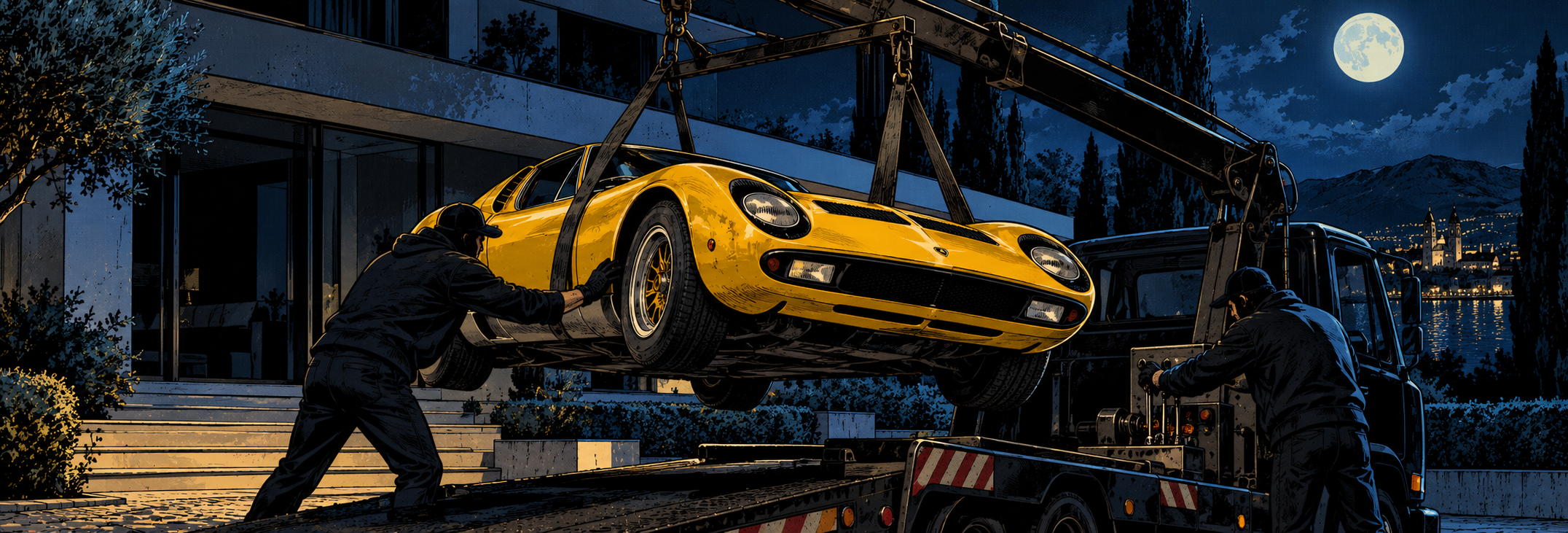
Insurance Claims & Disputes Involving Valuable Classic and Collector Cars
Classic car insurance differs significantly from ordinary motor insurance. For a valuable historic vehicle, the relevant issues are not limited to its age or ordinary used-car value. Market value, restoration value, originality, condition, provenance, matching numbers and documented vehicle history may all be important when determining insurance coverage and the amount payable after a loss.
This becomes particularly important for international collectors who own a valuable classic car located, registered, stored, restored or insured in Germany.
Following an accident, theft, fire or other insured event, disputes may arise over the insured value of the vehicle, repair costs, the preservation of original components or whether the insurer is entitled to reduce or refuse payment.
His practice includes disputes concerning rejected or reduced comprehensive insurance claims, vehicle valuation, repair costs, theft, damage during transport or workshop stays and the preservation of historically significant components. These are also the principal issues covered by the German insurance-law page.
Classic Car Insurance – Why Is It Different?
A rare collector car cannot always be assessed in the same way as an ordinary modern vehicle.
Depending on the particular insurance policy, relevant factors may include:
- market value,
- restoration or reinstatement value,
- an agreed vehicle value,
- restoration condition,
- originality,
- rarity,
- documented provenance and history,
- matching numbers, and
- existing valuation reports.
The decisive question, however, is always what the individual insurance contract and the applicable insurance terms actually cover.
For an international owner, it is therefore important not to assume that terminology used in a German insurance policy necessarily corresponds to apparently similar concepts used by insurers in the UK, US, Switzerland or other jurisdictions.
Third-Party Liability and Comprehensive Insurance
German motor insurance distinguishes between different types of cover.
Third-party liability insurance (Kfz-Haftpflichtversicherung) generally covers liability for damage caused to third parties.
Partial comprehensive insurance (Teilkasko) may, depending on the policy, cover risks such as theft, fire, storm damage or broken glass.
Comprehensive insurance (Vollkasko) may additionally cover accidental damage to the insured vehicle caused by the policyholder and other risks defined in the contract.
For valuable classic cars, the precise wording of the policy is particularly important.
Market Value and Restoration Value
One of the central issues in classic car insurance disputes is the value of the vehicle.
Different valuation concepts should not be confused.
Market Value
The market value generally reflects the price that the particular vehicle could be expected to achieve on the relevant market.
Restoration or Reinstatement Value
The amount required to acquire and, where necessary, restore a comparable vehicle to a comparable condition may be significantly different from its market value.
This distinction can be substantial with rare collector vehicles.
A car may have undergone a restoration costing considerably more than its eventual market value. Conversely, a historically significant or exceptionally original vehicle may have a market value substantially exceeding the cost of its restoration.
The first legal question after a loss is therefore often not simply “What is the car worth?”, but rather:
Which valuation standard did the parties agree in the insurance contract?
Why a Current Classic Car Valuation Is Important
A professional valuation can be important both when insurance is taken out and when a later claim has to be substantiated.
It can document:
- the vehicle’s condition,
- its value at a particular date,
- originality,
- restoration status,
- matching numbers,
- special equipment and
- significant vehicle history.
Classic car values can change substantially over time. A valuation prepared many years before a loss may therefore no longer accurately reflect the vehicle’s value.
For high-value vehicles, the insured value and supporting valuation should consequently be reviewed periodically, particularly after a substantial restoration or significant changes in market value.
Avoiding Underinsurance
If the value of a collector car increases while the insured value remains unchanged, a significant financial gap can arise after a major loss.
International owners should therefore check whether:
- the agreed vehicle value remains appropriate,
- the policy contains relevant limits,
- a new valuation is required, and
- the insurer should be notified of a substantial increase in value.
The German page specifically identifies substantial restorations and significant market increases as circumstances in which the insured value should be reconsidered.
Comprehensive Insurance Claims for Classic Cars
Following damage to a valuable classic car, the insurer’s assessment may involve issues that rarely arise with ordinary vehicles.
Typical disputes concern:
- repair costs,
- market value,
- restoration value,
- use of historically correct replacement parts,
- repair rather than replacement of original components,
- transportation costs,
- labour rates charged by specialist classic car workshops, and
- diminution in value.
The fact that a less expensive technical solution exists does not necessarily resolve the issue for a historically significant collector vehicle.
Insurer Reduces the Repair Costs
A common dispute arises when an insurer accepts the claim in principle but reduces individual repair costs.
For example, the insurer and owner may disagree about whether:
- a specialist classic car workshop is required,
- an original component should be repaired rather than replaced,
- a historic replacement part must be sourced,
- a reproduction component is sufficient,
- particular bodywork or paintwork is necessary, or
- the hourly rates of a specialist restoration workshop are appropriate.
For a rare collector car, these questions may have consequences not only for repair costs but also for authenticity and future market value.
Original Parts and Historic Substance
Original components can be central to the identity and collector value of a classic car.
Replacing a damaged historic component with a newly manufactured reproduction may restore technical functionality while nevertheless affecting originality.
Depending on the vehicle and the insurance contract, the relevant questions may therefore include:
Can the original component be repaired?
Is a period-correct original replacement available?
Would the use of a reproduction part affect authenticity or value?
Whether the insurer is required to fund a particular repair method depends on the insurance terms and the circumstances of the individual claim.
Diminution in Value After an Insurance Claim
Even a professionally repaired collector car may be worth less after serious damage.
However, a claim against the owner’s own comprehensive insurer must be distinguished from a damages claim against a third party responsible for an accident.
Whether diminution in value is covered by the owner’s insurance policy depends on the contractual insurance cover.
This is an important distinction between this insurance-law topic and a claim for accident damages against another driver or their liability insurer.
Theft of a Valuable Classic Car
The theft of a rare classic car can result in a substantial insurance claim.
In such cases, documentation of the vehicle and its value becomes particularly important.
Relevant evidence may include:
- valuation reports,
- purchase documents,
- restoration invoices,
- photographs,
- documentation of provenance and vehicle history,
- originality records, and
- evidence concerning significant components and matching numbers.
For rare cars, the dispute may not simply concern whether a theft occurred but also how much the particular vehicle was worth immediately before it disappeared.
Comprehensive documentation assembled before a loss can make that question substantially easier to establish.
Fire, Transport and Workshop Damage
Not every insurance claim involving a classic car results from a road accident.
Valuable historic vehicles may also be damaged through:
- fire,
- transportation,
- loading and unloading,
- workshop operations,
- test drives, or
- natural events.
These cases may involve more than one potential claim.
For example, following damage during transportation or while the car is at a workshop, it may be necessary to examine both insurance coverage and potential liability claims against the carrier, workshop or another third party.
For an international collector, questions of jurisdiction and applicable law may additionally arise where the owner, insurer, vehicle and party responsible for the damage are located in different countries.
Duties of the Policyholder After a Loss
German insurance policies regularly contain contractual duties (Obliegenheiten) that may become important after a claim.
Depending on the policy, these may concern:
- truthful information when taking out the insurance,
- timely notification of a loss,
- cooperation with the insurer’s investigation,
- submission of requested documents, and
- reasonable measures to mitigate further loss. Rechtsanwälte
An alleged breach of such a duty can become the basis for reducing or refusing payment.
However, an insurer’s reliance on an alleged breach does not automatically establish that the refusal or reduction is legally justified. The policy wording, the alleged breach and its legal consequences have to be examined in the individual case.
German Insurer Rejects the Classic Car Claim
If an insurer refuses payment or substantially reduces the claim, the reasons should be analysed systematically.
Relevant questions include:
- Which provision of the insurance policy is the insurer relying on?
- Which insured value was agreed?
- Which facts are disputed?
- What evidence exists regarding the vehicle and the loss?
- Which expert reports have been prepared?
- Is the insurer disputing coverage, causation, repair costs or vehicle value?
- Is an alleged breach of contractual duties being relied upon?
A rejection letter should therefore not be considered in isolation. The insurance policy, applicable insurance terms, valuation reports, technical evidence and correspondence should be reviewed together.
Preserving Evidence After Damage to a Classic Car
Evidence preservation can be critical before substantial repairs begin.
Relevant material may include:
- detailed photographs,
- damaged original components,
- expert reports,
- restoration records,
- invoices,
- historic vehicle documentation,
- previous valuation reports, and
- correspondence with the insurer.
For substantial claims, an independent expert examination may be appropriate.
This is particularly important if a repair will remove the very condition that later needs to be proved.
International Owners – Do I Need to Be in Germany?
Not necessarily.
International clients can provide insurance policies, correspondence, valuation reports, photographs and other documents electronically, and the initial assessment can generally be conducted in English.
Where the vehicle is located in Germany, technical evidence can be coordinated locally if required.
Depending on the circumstances, we can assess issues concerning German insurance law, insurance coverage, valuation, evidence and claims against German insurers or other parties involved in the loss.
German Lawyer for Classic Car Insurance Disputes

Dr. Louis Rönsberg is a German lawyer and partner at SLB LAW in Munich with many years of experience in classic car law and complex civil litigation.

He represents owners of valuable collector vehicles in disputes involving liability and comprehensive insurers, including claims following accidents, theft, transport damage and workshop damage. His work particularly covers cases in which market value, restoration value, originality and the special characteristics of historic vehicles are material to the insurance settlement.
Where appropriate, the legal assessment can be coordinated with specialist classic car experts and other technical professionals.
FAQs
What can I do if a German insurer refuses to pay my classic car claim?
The policy, insurance terms and insurer’s stated reasons should first be reviewed together. Relevant issues may include coverage, the agreed vehicle value, the cause and extent of the damage, expert evidence or an alleged breach of contractual duties.
How is the value of a classic car determined for an insurance claim in Germany?
This depends primarily on the insurance contract and the valuation standard agreed by the parties. Market value, restoration or reinstatement value and an agreed vehicle value should not be treated as interchangeable concepts.
Will German classic car insurance cover the full cost of specialist repairs?
That depends on the policy and circumstances of the loss. Disputes may concern the need for a specialist workshop, labour rates, repair methods and whether original, period-correct or reproduction components should be used.
What happens if an original part is damaged?
For a valuable collector car, replacement of an original component can affect authenticity and value. It may therefore be necessary to determine whether the component can be repaired, whether an original replacement can be sourced and what repair method the insurance policy covers.
What documents should I keep in case my classic car is stolen?
Important evidence can include current valuation reports, purchase documents, photographs, restoration invoices, provenance and vehicle-history records and documentation of originality and matching numbers.
Can an insurer refuse payment because I breached an obligation under the policy?
A breach of contractual duties may have consequences under German insurance law, but an insurer’s refusal or reduction is not automatically justified merely because it alleges such a breach. The particular obligation, circumstances and legal consequences must be examined.
Can you represent me against a German insurer if I live outside Germany?
Yes. An initial assessment can generally be conducted remotely and in English. Insurance documents, correspondence, valuations and photographs can be provided electronically, while technical evidence in Germany can be coordinated where necessary.

Problems with a Classic Car Insurance Claim in Germany?
If a German insurer has rejected your claim, reduced the repair costs, disputed the value of your classic car or refused full compensation following an accident, theft, fire or other loss, we can assess your legal position under German law.
We review the insurance policy, applicable terms, valuation reports, technical evidence and the insurer’s settlement decision and represent international owners in negotiations and disputes with insurers.